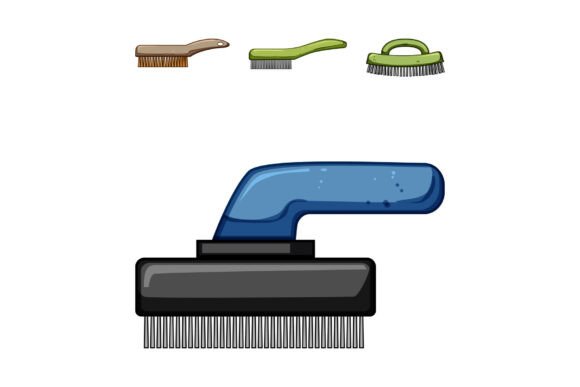
Various Cleaning Brushes and Wire Brush Options: Evaluating Heavy-Duty Tools for Industrial and Household Tasks
Selecting the appropriate cleaning implement requires more than simply picking up the stiffest bristle available. The category of various cleaning brushes and wire brush tools encompasses a vast spectrum of designs, materials, and handle configurations intended for specific surface interactions. Whether addressing carbon buildup on industrial machinery or removing grout haze in a residential renovation, the effectiveness of the tool depends entirely on matching the abrasive medium to the substrate. Understanding the distinctions between wire filament types, synthetic scrubbing styles, and ergonomic handle designs is essential for achieving efficient results without causing unintended surface damage.
Distinguishing Wire Filament Materials and Applications
Wire brushes are often categorized broadly, but the metallurgy of the bristles dictates their practical utility. When evaluating various cleaning brushes and wire brush options, the primary decision factor is usually the hardness of the wire relative to the material being cleaned. A general rule in surface preparation is to use a brush that is softer than the base material to prevent gouging while still being hard enough to remove contaminants.
- Carbon Steel: These are the standard for heavy-duty rust removal, paint stripping, and weld cleaning on ferrous metals. They offer high tensile strength and aggressive cutting action. However, they should never be used on stainless steel or aluminum, as embedded iron particles can cause flash rusting and corrosion on non-ferrous surfaces.
- Stainless Steel: Essential for food processing equipment, marine environments, and stainless steel fabrication. These wires resist corrosion and do not contaminate non-ferrous metals. While less aggressive than carbon steel, they provide the necessary abrasion for sanitary cleaning without introducing foreign oxides.
- Brass and Bronze: Softer than steel, these are ideal for cleaning spark plugs, electrical contacts, and delicate metal surfaces where scratching is unacceptable. Brass is also non-sparking, making it a mandatory safety choice in volatile environments involving flammable gases or dust.
- Nylon Abrasive: Often impregnated with silicon carbide or aluminum oxide, nylon filament brushes bridge the gap between wire and soft scrubbers. They conform to irregular surfaces better than metal wire and are excellent for deburring, edge blending, and cleaning textured plastics or wood without altering dimensions.
The tradeoff here is primarily between aggression and surface preservation. A carbon steel knot brush will strip rust faster than any alternative, but it will also leave deep scratch patterns that may require subsequent finishing steps. Conversely, a brass brush preserves the finish but may require significantly more time and labor to achieve cleanliness on heavily oxidized surfaces.
Evaluating Scrubbing Styles Beyond Metal Wire
Not every task within the realm of heavy-duty cleaning requires metallic filaments. Various cleaning brushes and wire brush collections frequently include synthetic alternatives designed for chemical compatibility and moisture resistance. Synthetic brushes differ fundamentally from wire brushes in how they interact with soil. Wire tends to cut and scrape, while synthetic fibers often sweep and agitate.
For tasks involving alkaline cleaners, acids, or solvents, synthetic options like polypropylene or polyester are often superior. Metal wires can react chemically with certain cleaning agents, degrading rapidly or creating hazardous byproducts. Furthermore, synthetic bristles retain their shape when wet, whereas natural fibers like tampico or palmyra tend to soften and lose stiffness. This makes synthetics the preferred choice for wet scrubbing in janitorial, automotive, and food service contexts. However, synthetics lack the thermal resistance of metal; using them on hot engine components or freshly welded seams will result in immediate melting and tool failure.
Handle Configurations and Ergonomic Tradeoffs
The interface between the user and the abrasive element is just as critical as the bristle itself. Heavy-duty cleaning tools are defined largely by their handle architecture, which influences leverage, fatigue, and access. When comparing products, consider the mechanical advantage required for the specific application.
Long-Handled Deck and Floor Brushes
Tools featuring extended handles, typically ranging from 48 to 60 inches, are engineered for large horizontal surfaces. The primary benefit is posture; they allow the user to apply downward pressure using body weight rather than arm strength alone. This is crucial for preventing repetitive strain injuries during prolonged scrubbing sessions. The tradeoff is reduced tactile feedback. It is difficult to gauge exactly how much pressure is being applied to a specific spot through a long lever, increasing the risk of uneven cleaning or accidental damage to adjacent fixtures. These are best fit for open floor areas, decks, and pavement where precision is secondary to coverage.
Short-Handled Detail and Scrub Brushes
Handheld units offer maximum control and direct force transmission. They are indispensable for vertical surfaces, tight corners, and intricate machinery parts. The shorter lever arm allows for nuanced pressure adjustments, making it easier to clean around bolts, hinges, and seals without damaging surrounding gaskets. The limitation is obvious: increased physical fatigue. Using a short-handled heavy-duty brush on a large floor area is inefficient and ergonomically hazardous. These tools excel in maintenance repair and overhaul (MRO) tasks, bathroom sanitation, and automotive detailing where surface geometry is complex.
Drill Attachments and Powered Options
Mechanized cleaning via drill attachments represents a significant shift in efficiency. These tools convert rotational torque into scrubbing power, drastically reducing manual exertion. They are particularly effective for removing baked-on grease, tire marks, and mineral deposits. However, powered brushes introduce new risks. The high RPM can generate excessive heat, potentially warping plastic substrates or discoloring metals. There is also a higher risk of bristle detachment at high speeds, necessitating proper personal protective equipment (PPE). While manual various cleaning brushes and wire brush tools offer consistent, predictable results, powered versions require a learning curve to manage speed and pressure effectively.
Decision Factors for Industrial Versus Residential Use
The context of use should drive the selection process. Industrial environments prioritize durability, safety compliance, and throughput, while residential users often prioritize versatility, storage convenience, and surface aesthetics.
In industrial settings, the cost per hour of operation matters more than the initial purchase price. A cheaper brush that sheds bristles or loses stiffness after two hours of use is ultimately more expensive than a premium tool that lasts a full shift. Industrial specifications often mandate specific wire gauges, trim lengths, and handle materials (such as chemical-resistant resins) to meet safety standards. For example, food manufacturing facilities require color-coded handles to prevent cross-contamination, a feature rarely found in general-purpose hardware store offerings.
Residential and light-commercial users face different constraints. Storage space is limited, and tasks are highly variable. A homeowner might need to clean a grill, scrub patio furniture, and remove soap scum from tile all in one afternoon. In this scenario, a modular system with interchangeable heads or a multi-pack of specialized brushes offers better value than a single industrial-grade tool. Residential users also tend to be less tolerant of surface marring. While an industrial mechanic accepts scratches on a chassis frame, a homeowner will reject a brush that damages vintage tile or polished wood. Therefore, residential selections often skew toward medium-stiffness synthetics and brass wires rather than aggressive knotted steel.
Assessing Quality Indicators and Longevity
When comparing various cleaning brushes and wire brush products, visual inspection can reveal significant quality differences. For wire brushes, examine the anchor points. High-quality brushes use secure stapling or epoxy anchoring to prevent wire shedding, which is both a performance issue and a safety hazard. The density of the fill material also correlates with lifespan; sparse brushes may feel softer initially but wear out faster and apply pressure unevenly.
For synthetic and hybrid brushes, check the flagging (split ends) of the bristles. Flagged tips increase surface area and improve soil pickup, but unflagged straight tips are better for moving heavy debris. Handle construction is another key indicator. Solid core handles resist cracking under heavy load, while hollow handles are lighter but more prone to failure if used as a pry bar—a common misuse in heavy-duty scenarios. Rubberized grips reduce slippage when wet but can degrade when exposed to harsh solvents over time. Hard plastic or wood handles offer better chemical resistance but transmit more vibration to the hand.
Making the Final Selection
There is no universal solution within the category of various cleaning brushes and wire brush equipment. The optimal choice emerges from a clear understanding of the substrate hardness, the nature of the contaminant, the required production rate, and ergonomic limitations. Aggressive wire brushes solve problems that synthetics cannot touch, yet synthetics preserve finishes that wire would destroy. Long handles save backs on open floors, while short handles save details in tight spaces.
Rather than seeking a single "best" tool, effective maintenance programs and well-equipped workshops maintain a curated inventory covering the spectrum of abrasion levels and form factors. Evaluate each potential purchase against the specific worst-case scenario it must handle. If a tool is too aggressive for your most delicate regular task, it belongs in a separate category. If it is too soft for your toughest regular task, it will become a source of frustration and wasted labor. By aligning tool specifications with actual operational realities, users can build a collection of heavy-duty cleaning equipment that delivers consistent, safe, and efficient results across diverse applications.