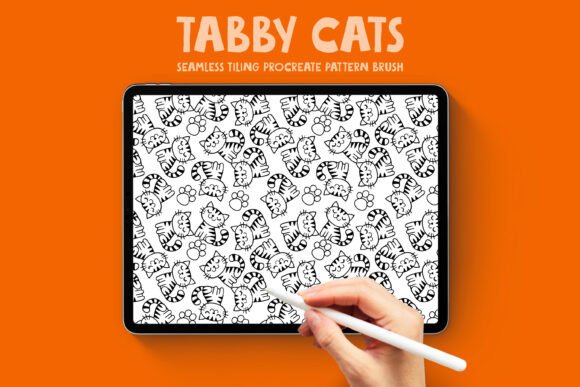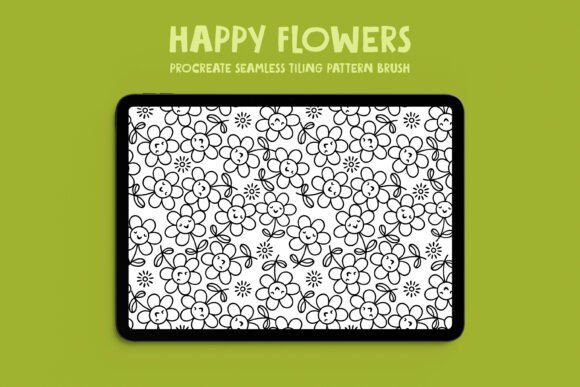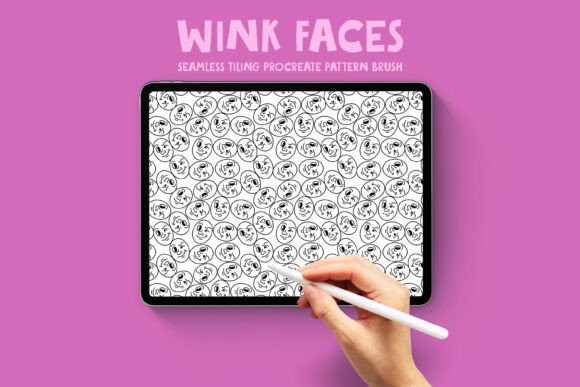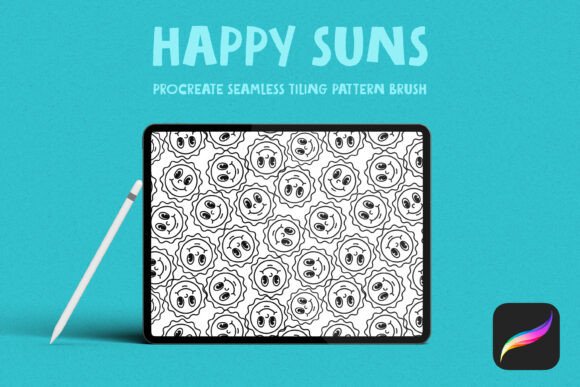
Character Faces Procreate Pattern Brush: Streamlining Seamless Surface Design
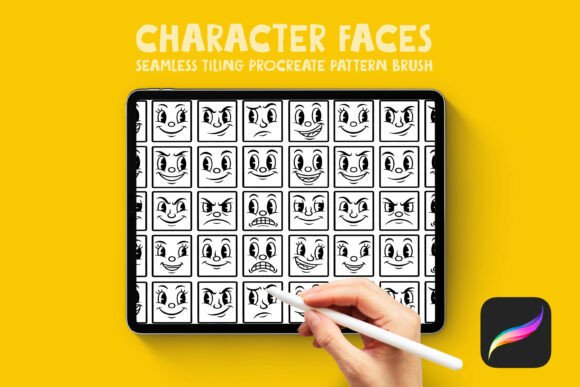
In the evolving landscape of digital illustration, the intersection between artistic expression and technical efficiency is where modern creators find their greatest leverage. For surface pattern designers, educators, and print-on-demand entrepreneurs, the ability to generate complex, repeating visuals without tedious manual alignment is transformative. The Character Faces Procreate Pattern Brush represents a significant shift in this workflow, moving away from the traditional method of designing individual motifs and manually arranging them into a grid. Instead, this tool utilizes advanced brush engine settings to paint a continuous, perfectly tiled sequence of expressive cartoon faces with every stroke. Understanding how this technology functions and where it applies can help professionals and hobbyists alike expand their creative output while maintaining high standards of design integrity.
The Mechanics of Instant Tiling Technology
To fully appreciate the utility of a seamless tiling pattern brush, one must understand the distinction between standard brushes and those engineered for repetition. A typical Procreate brush stamps a texture or shape along a path based on spacing and jitter settings. However, a dedicated pattern brush like the Character Faces variant is programmed with specific geometric constraints that ensure the left edge of the brush tip aligns mathematically with the right edge of the previous stamp. This creates an unbroken visual flow regardless of canvas size or stroke direction.
This technical capability eliminates the most time-consuming aspect of surface pattern design: the testing phase. Traditionally, a designer would draw a face, duplicate it, offset it, check for seams, adjust the artwork, and repeat the process until the tile was flawless. With this brush, the seamlessness is baked into the asset itself. When you drag your Apple Pencil across the iPad screen, the software handles the spatial mathematics in real-time. This allows the artist to focus entirely on composition and placement rather than the underlying geometry of the repeat. The result is a playful, organic arrangement of character expressions that maintains structural perfection even when applied to large-scale backgrounds.
Applications in Commercial Print and Merchandise
For business owners and creators focused on print-on-demand (POD) products, speed and variety are critical metrics for success. The Character Faces Procreate Pattern Brush serves as a rapid prototyping tool for merchandise that requires personality-driven aesthetics. Because the brush generates high-resolution, seamless fills instantly, it is exceptionally well-suited for products where edge-to-edge coverage is necessary.
- Apparel and Textiles: Creating all-over print designs for shirts, leggings, or bandanas often requires massive canvas sizes. Manually tiling a small motif to cover a 4000x4000 pixel area can cause significant lag and layer management issues. Painting directly with a seamless brush reduces file complexity and processing time.
- Stationery and Paper Goods: Notebooks, greeting cards, and sticky notes benefit from whimsical, character-based patterns. The expressive nature of these faces adds emotional resonance to functional items, making them more appealing to consumers looking for personalized or cute aesthetic stationery.
- Home Decor: Mugs, phone cases, and throw pillows require designs that wrap around curved surfaces. A seamless pattern ensures that no matter where the design wraps or crops, there are no jarring visual breaks or mismatched elements.
The commercial viability of this tool extends beyond simple background generation. It allows for the creation of proprietary assets. Unlike stock vectors which may be used by thousands of other sellers, a pattern generated through unique brush strokes, varying pressure, and custom color palettes remains distinct to the creator’s brand identity.
Educational Value and Interactive Activity Pages
Beyond commercial merchandise, this type of digital asset holds substantial value in educational and developmental contexts. Educators, therapists, and parents frequently seek engaging materials for children’s activity books and learning resources. The playful nature of cartoon faces makes this brush an ideal instrument for creating content that captures young attention spans while serving functional pedagogical purposes.
When designing coloring book pages, consistency in line weight and style is paramount. Hand-drawing fifty unique faces for a single coloring book can lead to stylistic drift, where early pages look different from later ones due to artist fatigue. Using the Character Faces Procreate Pattern Brush ensures uniform line quality and stylistic cohesion throughout an entire publication. Furthermore, because the faces are expressive, they can be utilized for social-emotional learning activities. Teachers can create worksheets where children identify emotions, match feelings to facial expressions, or practice fine motor skills by tracing over the seamless lines.
For digital scrapbooking and kids' activity apps, the ability to generate instant backgrounds means that content creators can produce new themed packs rapidly. Whether the theme is "back to school," "summer camp," or "birthday party," the underlying character pattern provides a consistent visual anchor that ties disparate elements together without requiring hours of illustrative labor.
Optimizing Workflow for Digital Artists
Integrating specialized tools into a creative routine requires understanding best practices to maximize quality. While the Character Faces Procreate Pattern Brush automates the tiling process, the artist retains control over the final aesthetic through application techniques. Professional users should consider several factors when incorporating this tool into their projects to ensure the output meets industry standards.
Layer Management and Non-Destructive Editing: Always apply pattern brushes on a separate layer above your base colors but below detailed foreground elements. This separation allows for easy adjustments. If the pattern needs to be recolored, using Procreate’s Recolor tool or blending modes (such as Multiply or Overlay) preserves the original linework while adapting the palette to fit specific project requirements. This non-destructive approach is essential for professional workflows where client revisions are common.
Scale and Resolution Considerations: Although the brush creates a seamless repeat, the physical size of the brush tip matters. Users must ensure they are working at a resolution appropriate for their end goal. For print products, a minimum of 300 DPI is standard. If the brush appears pixelated when scaled up, it indicates the need to work at a larger canvas size initially or to verify the brush's native resolution settings. Understanding the relationship between brush scale and canvas dimensions prevents quality loss in final production files.
Variation Through Manual Intervention: While the automated tiling is efficient, pure automation can sometimes feel sterile. Experienced designers use the brush to lay down the foundational pattern and then manually add unique details, shadows, or highlights on top. This hybrid approach combines the speed of procedural generation with the warmth of hand-crafted artistry. Adding stray marks, varying the opacity of certain faces, or introducing secondary elements breaks up any potential visual rhythm that might make the pattern look too mechanical.
Technical Requirements and Compatibility
Adopting this tool requires specific hardware and software environments to function as intended. The Character Faces Procreate Pattern Brush is engineered exclusively for the Procreate ecosystem. Users must have an iPad capable of running the current version of Procreate to access the latest brush engine features that enable seamless tiling. While older versions of the app may import the file, certain dynamic behaviors related to spacing and rotation might not perform optimally without updated software.
An Apple Pencil or compatible high-precision stylus is strongly recommended. While finger painting is possible, the pressure sensitivity and tilt support of a stylus allow for greater variation in stroke dynamics, which can add subtle life to the pattern application. The tactile feedback of drawing with a pencil mimics traditional media, helping artists maintain a natural hand movement that translates into more organic-looking pattern fills.
File compatibility is straightforward; the product typically arrives as a .brushset or .brush file. Installation involves importing the file directly into the Procreate brush library via AirDrop, Files app, or cloud storage. Once installed, the brush behaves like any native tool, allowing for customization of size, opacity, and blend modes within the app’s interface. This plug-and-play accessibility lowers the barrier to entry for beginners while providing enough depth for advanced users to tweak parameters for specialized effects.
Strategic Advantages Over Traditional Methods
The decision to utilize a specialized pattern brush over manual tiling methods ultimately comes down to resource allocation. In a professional setting, time is a finite commodity. The hours saved by avoiding manual grid setup and seam correction can be reinvested into concept development, marketing, or additional product creation. For hobbyists and educators, the reduction in technical friction makes the creative process more enjoyable and less daunting.
Moreover, this tool democratizes surface pattern design. Historically, creating professional-grade seamless patterns required knowledge of Adobe Illustrator’s Pattern Maker tool or advanced Photoshop techniques. By bringing this functionality into Procreate’s intuitive, gesture-based interface, the Character Faces Procreate Pattern Bridge bridges the gap between casual illustration and professional textile design. It empowers users to produce portfolio-ready assets and marketable products without needing to master vector software or complex raster manipulation techniques.
Ultimately, the value of this digital asset lies in its versatility. It is not merely a shortcut; it is a foundational building block for a wide array of creative outputs. From the commercial viability of POD merchandise to the educational utility of activity sheets, the brush facilitates a workflow that is both efficient and expressive. By handling the mathematical precision of tiling automatically, it frees the artist to do what they do best: create engaging, character-driven art that resonates with audiences across multiple mediums.